
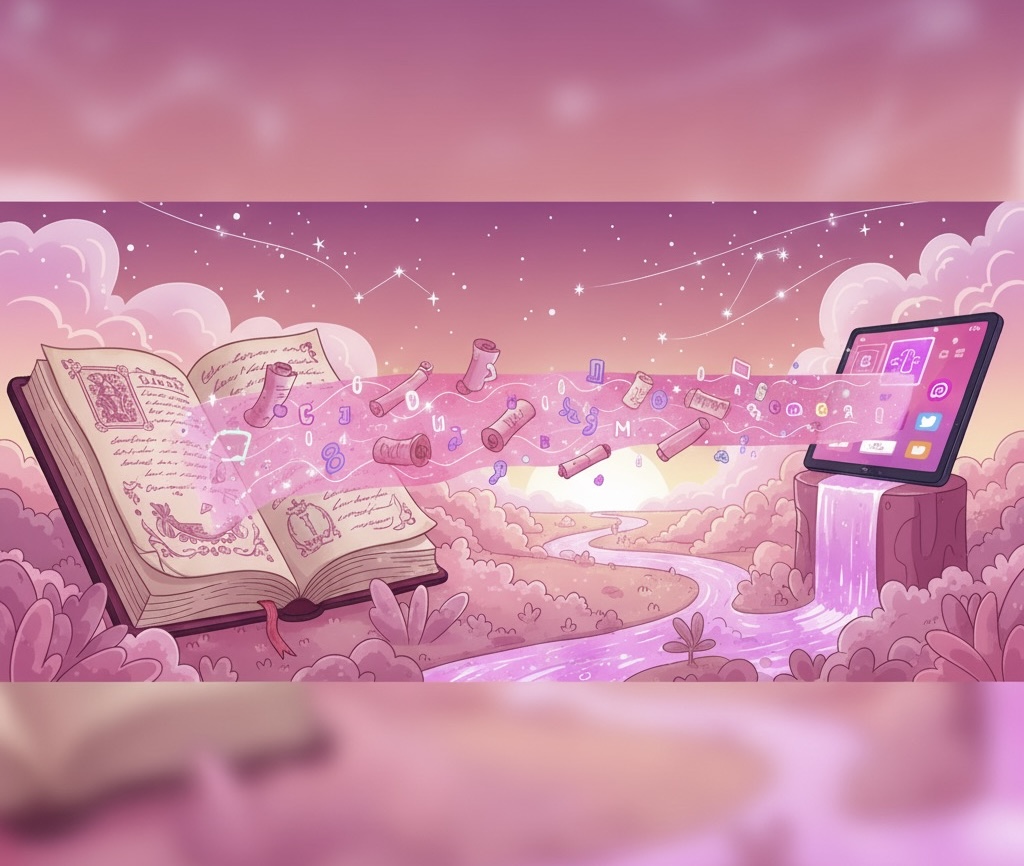
Redefining Literacy
“New Media and Literacy” by J.D. Applen takes a dive into how human’s understanding of literacy has been altered during the new digital era. By definition, literacy did mean the ability to simply read and write printed text. But, Applen debates that old definition is still there, but with an extension to people’s ability to communicate, create, and navigate meaning through technology.
The rise of digital tools, like blogs, social media platforms, multimedia, and interactive design helped literacy. It becomes a dynamic, participatory experience instead of just a passive one. Viewers are not viewed as just consumers, they are now co-authors in the forever expanding conversation that takes place online.
Again, old media made viewer passive consumers of information, so new media does flip that script. Popular platforms like YouTube, TikTok, and blogs, are created. They continue to be updated to allow viewers to respond, remix, and reframe existing content instantly and repeatedly. Applen highlights this interactivity as a new form of literacy, where participation and collaboration matter more than polished perfection.
This participatory culture reshapes how knowledge and information is spread through collective contribution instead of just that top down authority. In this new environment/era, expression becomes interactive and ongoing., and highly encouraged.
Critical Thinking in the Digital Age and Why it Matters
But still, Applen does warn people that with the new media’s open nature. It does create a demand to critical awareness. Anyone can publish anything, and this makes evaluating credibility essential and extremely important. He says that new media literacy does and should continue to involve questioning sources. It should also include learning to understand bias, and to think critically about how media influences society’s perceptions.
Being able to understand new media literacy helps to prepare us to be thoughtful digital citizens. As Applen puts it, the goal is not just to consume information. It is to connect knowledge across multiple platforms. It connects to people, and to contribute in a responsible way within a global network of voices.


Leave a Reply