
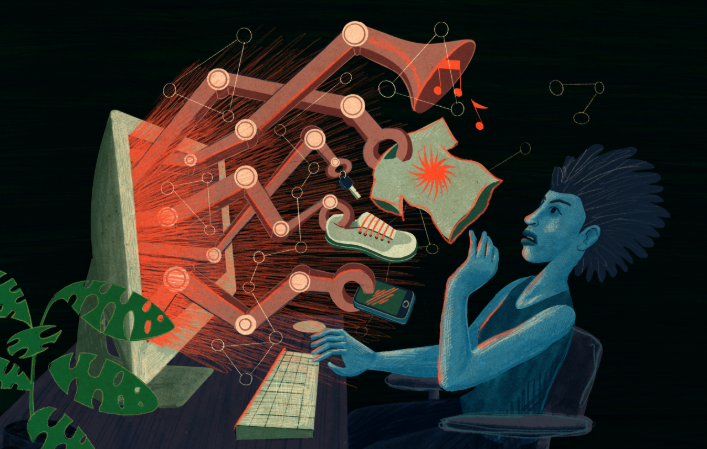
Algorithms are programmed
As intelligent as AI is, it still lacks a humanistic perspective. Feelings. Algorithms are programmed to complete specific tasks. However, many times the method of programing used to make algorithmic predictions can be biased. Algorithms are reliant on the person who created them. In the article, “A Theory of Persuasive Computer Algorithms for Rhetorical Code Studies,” Beck explains that algorithms are not simply neutral mathematical instructions. Instead, they can be persuasive because they reflect the values, beliefs, and decisions of their designers.
This connects directly to digital rhetoric because persuasion happens not only through written words, images, and videos, but also through the algorithms that determine what people see and how they interact with digital content. The algorithm is basically telling you how to feel and act online. It determines what info to include and what info to exclude so you are more likely to agree or relate to the materials.
AI Counseling
A funny example that many people do nowadays is using AI as a counseling tool, like therapy. My one friend swears by this. The major bias in this, though, is that the algorithm is producing responses that accommodate your thinking. AI develops a narrative each time you interact. So that it can “better assist,” or tell you what you want to hear. Therefore, you feel empowered because it consistently tells you that you’re right. However, a true therapist would likely encourage accountability and reflection.
We cannot assume that the information appearing first in a search is necessarily the most accurate. It’s what the search engine wants you to believe. This is why we should question how information is selected, who created the algorithm, and whose perspectives might be missing. Beck’s article recognizes that digital rhetoric involves more than the messages people create. It involves hidden systems that organize and deliver those messages. Understanding algorithms can help us become more responsible digital citizens.


Leave a Reply