
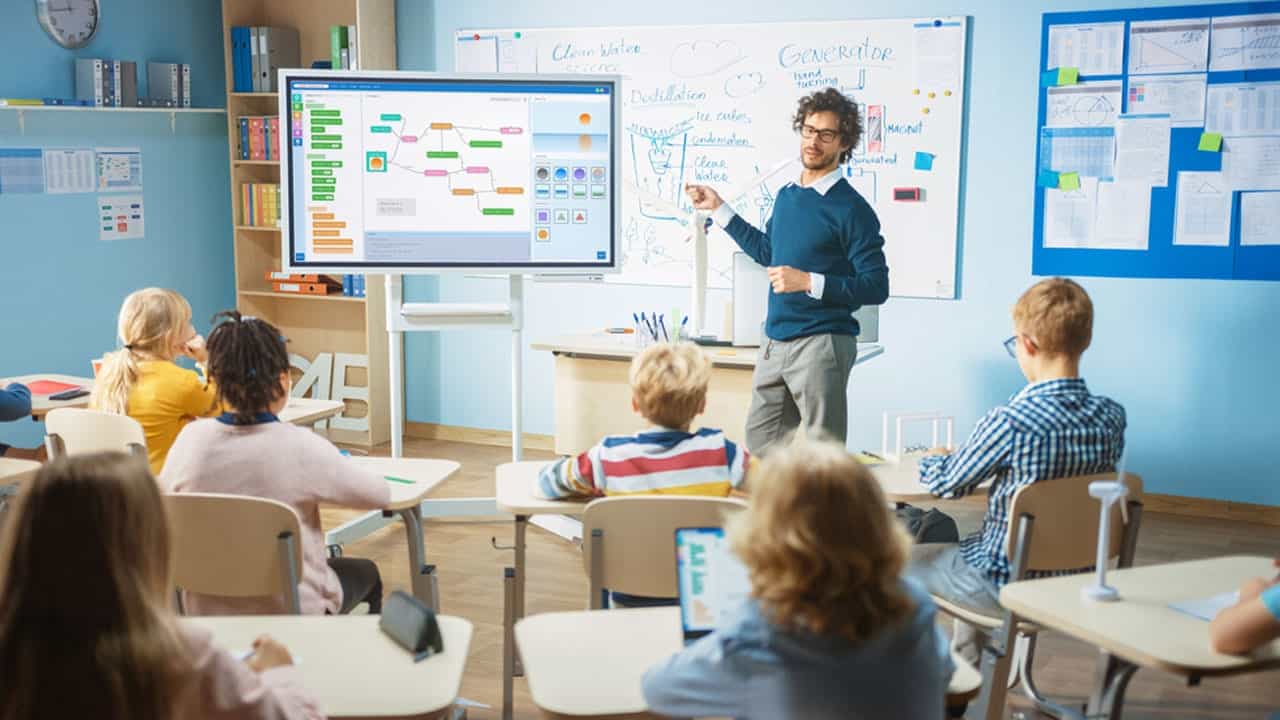
In today’s classroom, educators often use technology as a helpful tool to enhance student learning and engagement. But in this blog, I won’t be talking about technology in the classroom and how it positively impacts students and their learning. If anything, I’ll be discussing the not-so-good aspects of technology in the classroom. As Marshall McLuhan mentioned in his section of “Old Media, New Media, and Knowledge,” “the medium is the message.” When looking at this statement through the lens of an educator, it emphasizes the idea that it’s not just about what we are teaching, but instead, how we are teaching it.
In the article “Pedagogy and the Logic of Platforms,” author Chris Gilliard explained that educational technology platforms often prioritize data collection, monetization, efficiency, and surveillance over student success. And although platforms like Canvas and Google Classroom are incredibly convenient, they add to the issue of discrimination and digital redlining, ultimately making learning a transactional experience for students rather than meaningful and authentic one.
What Can We Do As Educators?
When considering the words of McLuhan and Gilliard, it’s clear that their main focus is to encourage educators to be more intentional and critical of their uses of technology in the classroom. Since technology is not neutral, it is crucial for teachers to recognize the underlying impact it has on their students, frequently asking themselves questions like: “What are the tools I’m using in the classroom subliminally teaching?”, “How do these tools support my goals for students and my pedagogical values?”, “How can we all collectively (teacher and students) discover a new way to exist online?”.
As a whole, it is our duty as educators to rethink the impact of technology not just as an addition to the classroom, but as a way to create a truly safe and effective space that allows our students to take equitable opportunities.


Leave a Reply