
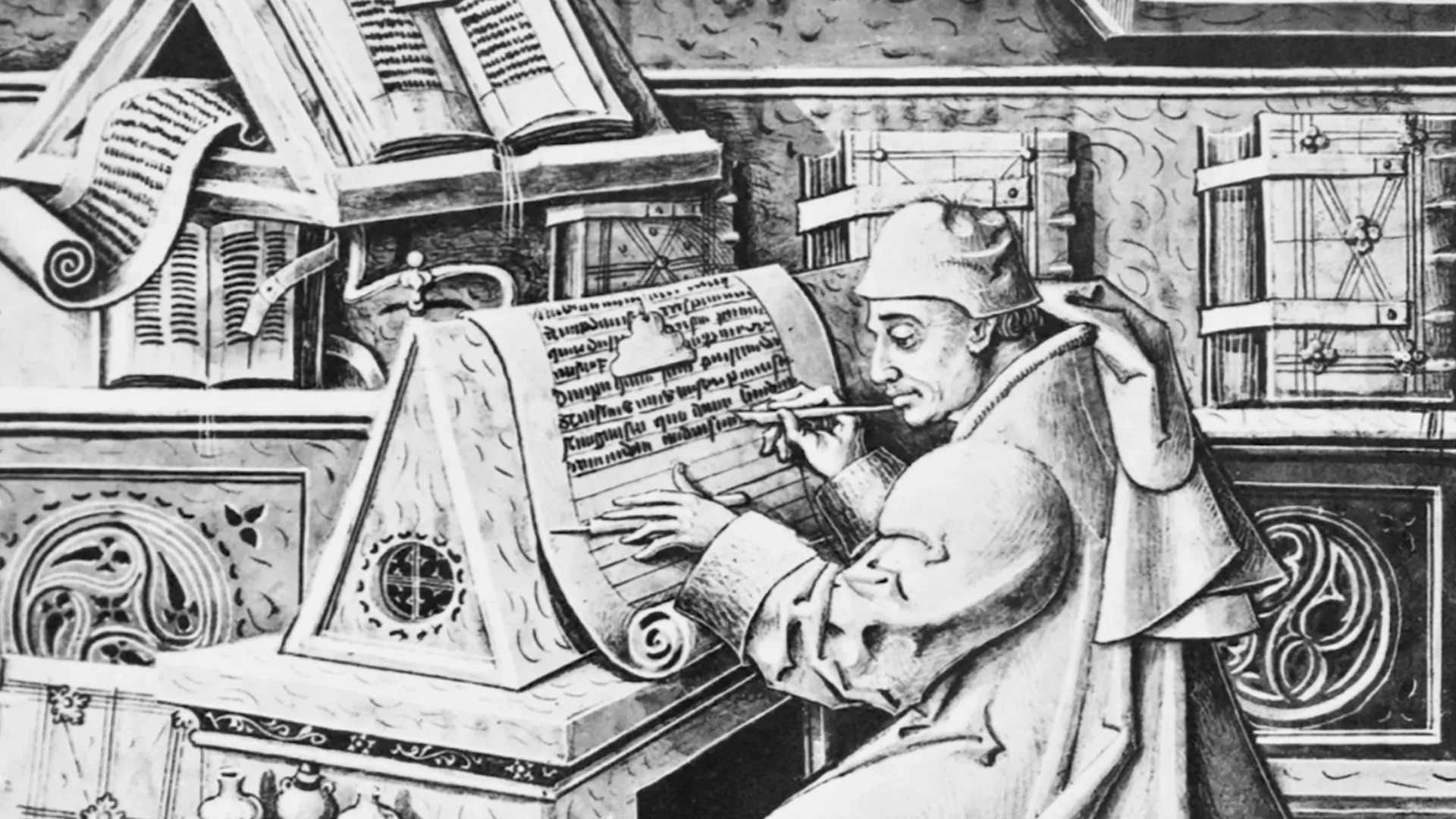
A Quick Time Travel: From Papyrus to Pixels
Long before skibidi and 6 7, humans were etching ideas onto stone. Then from stone we moved to papyrus, then papyrus to paper. Now, almost everyone has access to countless printed and digital pages. All of these are littered with any kind of information you could hope to search for. Despite these advancements, each step didn’t destroy the last; they transformed them. Bolter and Grusin used the term remediation to describe this process.
When oral storytelling evolved to writing, humans suddenly had the ability to see their words. This changed many things, but the most important of which was permanence. Spoken word can be forgotten or misremembered, but the written word has a “different claim to reality”, as Bolter put it.
Think more recently: emails replacing handwritten letters. Faster to write, faster to send, faster to receive. All with the convenience of not leaving your room. Even just the way we communicate with each other has been affected by the evolution of our writing habits. Think, have you ever said “LOL” or “tbh” out loud? No? Just me?
The Weight of Words: Print vs. Screen
Applen and Bolter stated that with each new technology, we gain efficiency but lose something else. For example, letters are much slower than emails, but have much more personality since you can see the author’s actual handwriting. Now, our language has been even further compressed: some people communicate entire sentences in only acronyms and emojis. Tbh ts hw lowk pmo sb ngl. Is your tone different when you handwrite something compared to when you type/text it? I’d be willing to bet that it is. It’s only natural that our real-life communication evolved alongside our means of doing so.
Writer Sven Birkerts did not have much enthusiasm about the transition from books to digital. He believed that the written word contained substance that text could not replicate. The fact that stone inscriptions, manuscripts, and handwritten letters all take deliberate effort makes us take them a little more seriously in his eyes. Nowadays, text is weightless. You can copy, paste, and delete as much as you want wherever you want. Mistakes aren’t as serious because of spellcheck. You can even get AI to do your writing for you. All this does make it easier to experiment with your writing, but also arguably makes it more forgettable.
Living in the Late Age of Digital Print
Are things really being lost in the process of our digitalization of everything? Birkerts thinks so. They warn that our constant online connection blurs our sense of individuality, our “private lives” once uploaded simply becoming a cog in the machine of endless scrolling. Even through attempts at “standing out” online, we all use the same apps, formats, filters, and exist within the same algorithms.
Yet even still, there is some beauty in this. One interconnected internet culture enables people from all over the world and across various walks of life to communicate with and understand each other. The Late Age of Print is really about coexistence: the tactile and the digital, the permanent and the fleeting.
Final Thought
In my opinion, I don’t think we should focus on mourning what is gone; instead, we should stay aware of what’s changing. The evolutions of our media have changed the way we think, write, and connect, and this will continue for who knows how long


Leave a Reply