
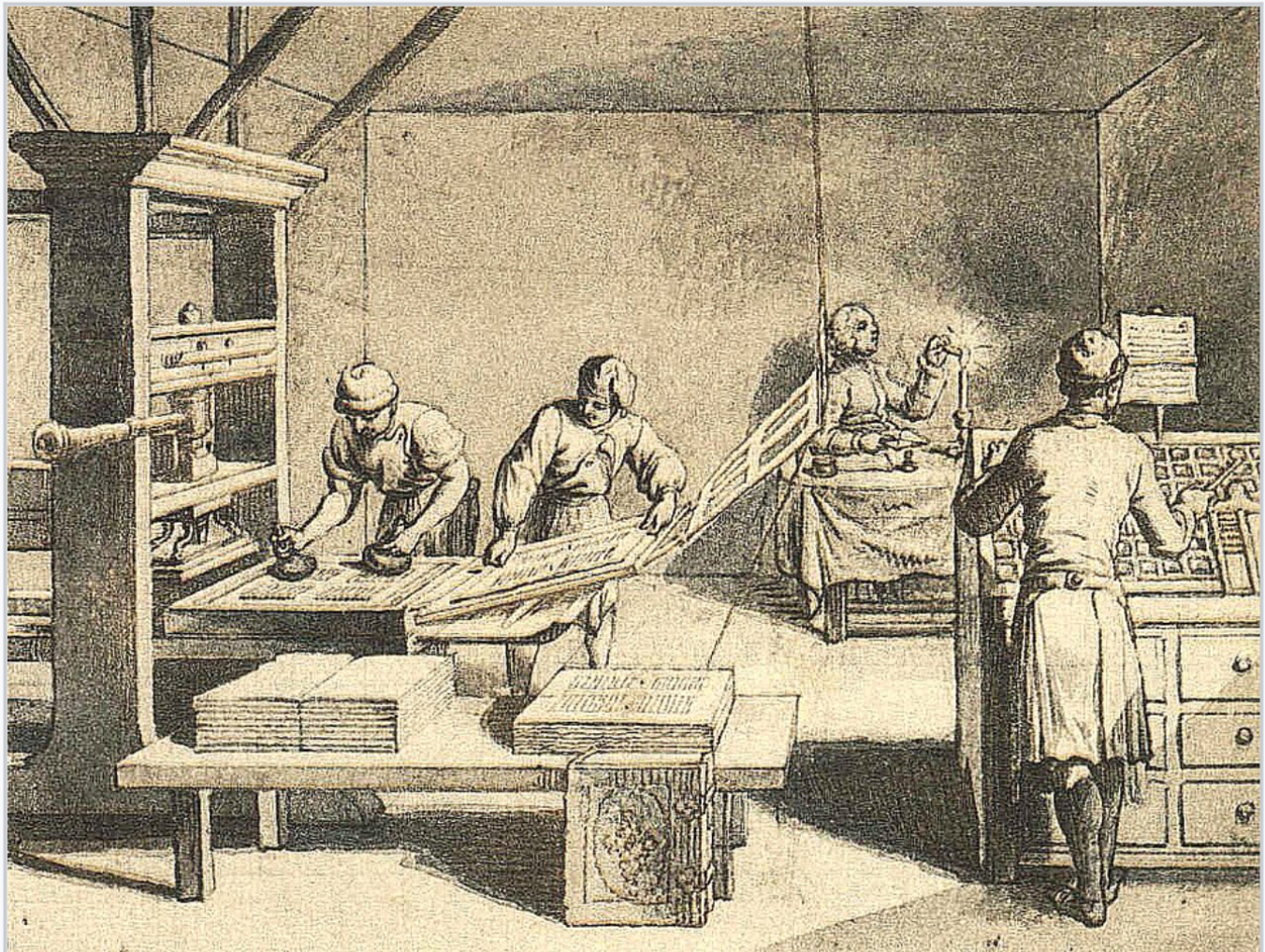
In “The Age of Print and the Late Age of Print,” J.D. Applen helps readers to see how printed text shaped not just reading, but how people think in general. During this printing era books, newspapers, and pamphlets helped the structure of how knowledge was shared and preserved. The physicality of print, with the smell and texture, and permanence gave reading such a deliberate and focused act. Humans were able to connect deeply with the page, and the printed words were able to carry a sense of authority and trust.
Print was not just a form of technology, it was seen as a cultural force. People who owned books were seen as being educated and intelligent, and people who also went to a library were seen as standing in a temple of knowledge. A page with print on it was stable, unchanging, and reliable. A printed page was something that demanded patience and attention. People while reading had to sit still, digest whatever information they took in slowly and reflect on it, which created a deeper relationship between mind and material. Applen helps to reminds us that print literacy trained a society to think linearly and critically, which created the foundation for modern education and communication.
Entering the Late Age of Print
The more digital media rose, Applen then highlights that the late age of print did not replace print in its entirety, it just reshaped it. Texts became more fluid and were shared instantly across multiple platforms and were constantly updated. Reading didn’t require a quiet corner or a good lamp anymore, reading could happen anywhere and on any device. While this shift increased accessibility and participation, it also did fragment people’s attention. That once stable and still page became a dynamic screen.

With this transformation, it also allowed for more people to publish and make their voices heard. Blogs, tweets, and online articles made it manageable for anyone with Wi-Fi to contribute to any global conversations. However, with people having such freedom did come with chaos misinformation, developed short attention spans, and the constant buzz of notifications. Applen incites readers to see this as not a bad thing or a downfall, but as way to redefine literacy. The digital age dares us to think in new ways with a new mindset, helping us to learn about hyperlinks, what multitasking looks, and what media overload could look like while still seeking meaning.
Words on Different Pages and Screens: A New Relationship
Applen shines light on how digital text almost request for readers to interact, instead of just simply consuming it. Knowing how to understand hyperlinks, scrolling, and multimedia does blur the line between writer and reader. So far both print and digital forms are able to coexist, with each one influencing how we learn and connect.
Interacting with digital reading does turns us into active participants. Clicking different links, commenting, sharing, and remixing ideas in real time. The meaning of page has evolved dramatically into a space of collaboration instead of isolation. Even now, print maintains such a nostalgic and intellectual appeal, which reminds even me, of the joy of slowing down. Applen recommends that balancing both mediums honoring the depth of print and the dynamism of digital offers the best of both worlds. These together show how technology does not destroy literacy, it transforms it.


Leave a Reply