
Reading J.D. Applen’s Writing for the Web: Composing, Coding and Constructing Web Sites makes you realize what it means to “write” in the 21st century. I always take a moment to ask myself- how did we even get to the language we use now? Applen doesn’t just describe how to make a website, he challenges us to see the web as a living, breathing, and a form of expression.
Aztec World
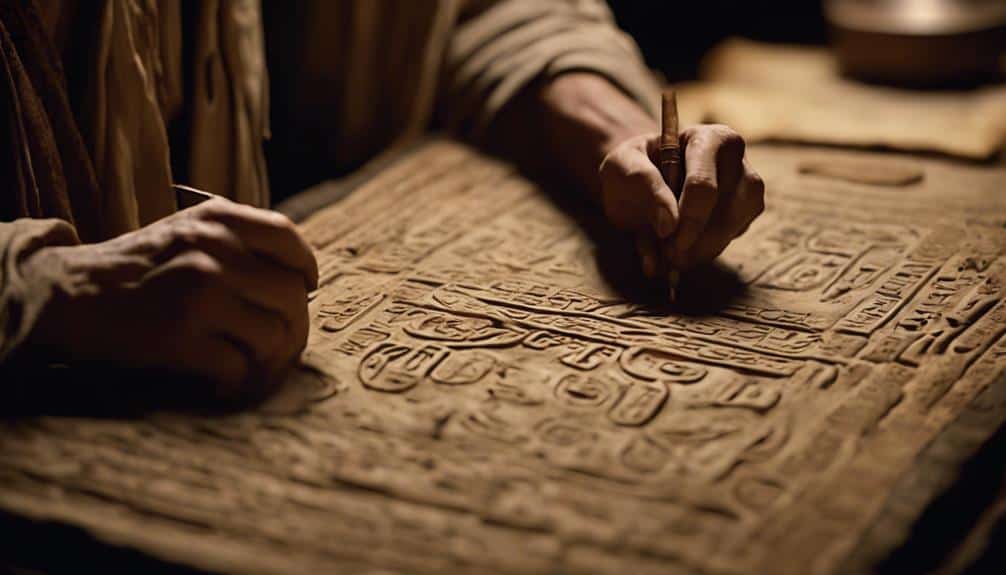
Let’s go back to Aztec writing, known as Nahuatl script, where the Aztec relied on pictographs and drawings to convey meaning and to understand their history and culture. Imagine a website used with glyphs and pictures instead of words. What would a blog post look like then? I can’t picture myself drawing out letters of the alphabet to keep it on a website, just to share my thoughts online. Yet here we are in a full circle moment. Digital writing is filled with icons, emojis, and visuals that speak just as powerfully as text. 🙂
That’s where Applen explores that web writing is multimodal. A web text can speak through visuals, motion, and sound, making authors not just writers but digital fairies. I take a moment and go back to middle school, when we had to handwrite all our essays. To think we were ever at that time, I can’t imagine myself writing a 1,200-word essay.” I mean, who’s counting all those words anyway?
Applen states that because we use word processing software, “what is written loses its force as a powerful, perfect, and unchanging body of words.” Which is true, when I write in this blog post, I have to edit it to make my voice more “active,” but it’s not me. Grammarly changes words and puts synonyms to make you sound more academic. He says that because we use digital tools, what we write loses its “force as a powerful, perfect, and unchanging body of words.” And it’s true—when I write online, I constantly edit to make my tone more “active” or “engaging.” Grammarly jumps in with synonyms and style suggestions, reshaping my voice into something more academic—but less me.
Shift perspectives
When we used to write by hand, our mistakes felt human and part of the writing process. Digital pushes us to perfection. If we didn’t have these technologies, we wouldn’t be so obsessed with SEO scores and revising and editing. Our machines now such as AI, decide what “good” writing sounds like. Where does it give space for the human voice to fit in?
In our digital world, handwriting can be a dance with duality. It’s slower, intentional, and you are in a flow state as your pen connects to the paper and your thoughts are free-flowing. Handwritten is seen as something unique. Compared to now, where everything is digital, but I don’t necessarily mean it loses its touch. You can still feel someone angry through text. So what is that?
Maybe writing today isn’t about losing authenticity – but learning how to keep our humanity alive within the codes and pixels <3


Leave a Reply