
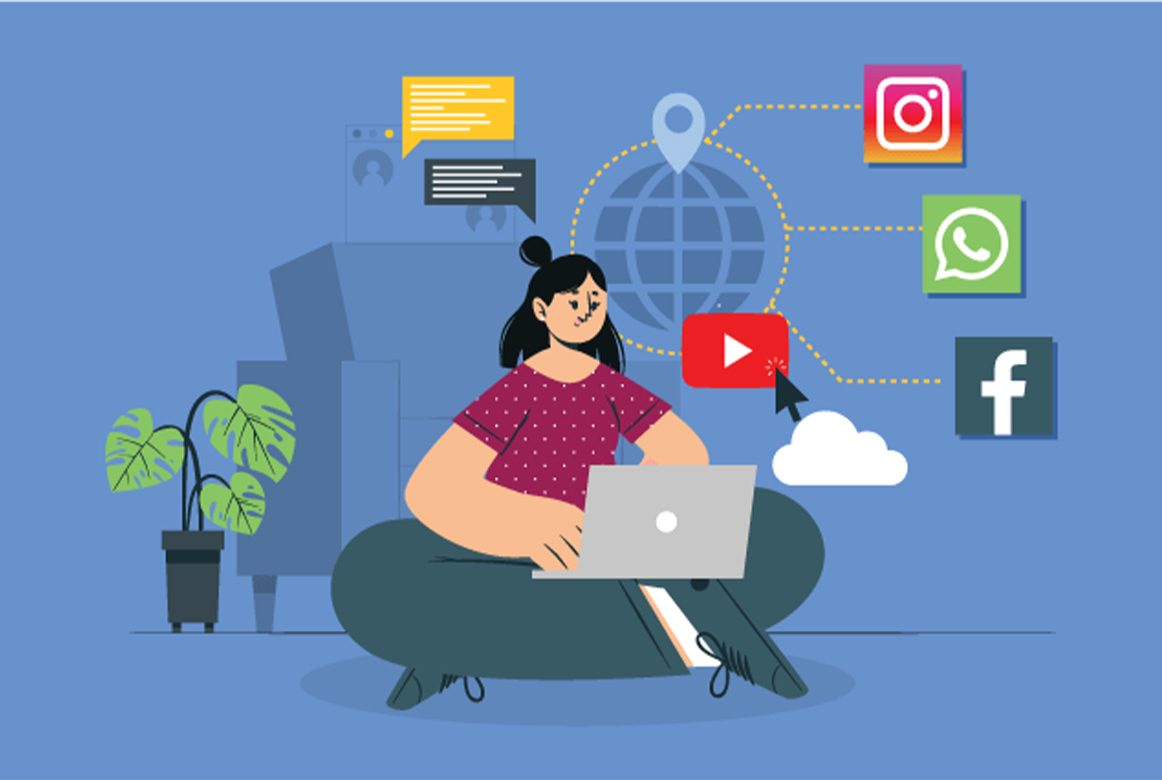
How do you define literacy when reading is as multimodal as it is today? Is someone only literate when they are proficient in scrolling, searching, and sharing online? Or is just simply being able to turn a page enough? In the current age, being literate means more than just reading and writing words; it includes the ability to navigate online platforms effectively. In Old Media, New Media and Knowledge, J.D. Applen explains that modern-day readers are participants in giving these terms meaning themselves, not just passively consuming the knowledge given to them.
From Print to Pixels
Richard Lanham, as cited by Applen, argues that the shift from print to screen transforms how we engage with text. Traditional print is fixed and linear: words on a page meant to be read but not altered. Digital text, by contrast, is fluid and interactive. Fonts can change, windows resize, and hyperlinks invite exploration.
Lanham calls this the age of the “electronic word.” Reading on a screen blurs the line between reader and writer: highlighting, editing, and commenting all become forms of participation. In this way, digital literacy resembles a conversation more than a lecture. Think about it: When you read online, are you simply taking in information, or are you co-creating it?
Modularity and Variability
Modularity and variability are the two key traits of digital media as described by media theorist Lev Manovich. Modularity means that the separate components of digital media keep their independence even when merged with other components. For example, you can rearrange a webpage without losing coherence because each part operates separately. Variability expands this idea, stating that digital works are very unlikely to exist in only one version. Websites, apps, and texts change rapidly, always updating with the newest flow of information and trends to adapt and become more personalized to the specific user’s experience.
The Database Self
For Manovich, the database represents a new cultural form. Traditional narratives depend on sequence and closure; databases organize meaning through association rather than order. Social media platforms illustrate this perfectly: a profile is not a single story but a collection of posts, images, and connections.
Applen suggests that our online identities reflect this form. We no longer define ourselves through continuous stories but through fragments: likes, photos, playlists, and links. In the digital age, we are databases of ourselves. Does your social media profile tell a story, or present a collage of moments?
The Myth of Interactivity
Manovich also challenges the idea that new media are truly “interactive.” Clicking, liking, and linking can create an illusion of agency, but these actions often follow predetermined paths designed by others. True interactivity, he argues, would mean that digital systems respond uniquely to each user’s thoughts and emotions, something our current technologies rarely achieve.
Rethinking Literacy
Being literate in new media spaces isn’t simply knowledge of how to use the technology; it’s an understanding of the function of technology in networked spaces. To be literate in the digital age means possessing the ability to traverse an environment where information is constantly and rapidly changing around us. It is important for us readers and writers to remember that literacy is not static anymore; it’s interactive, multimodal, and always in motion.


Leave a Reply