
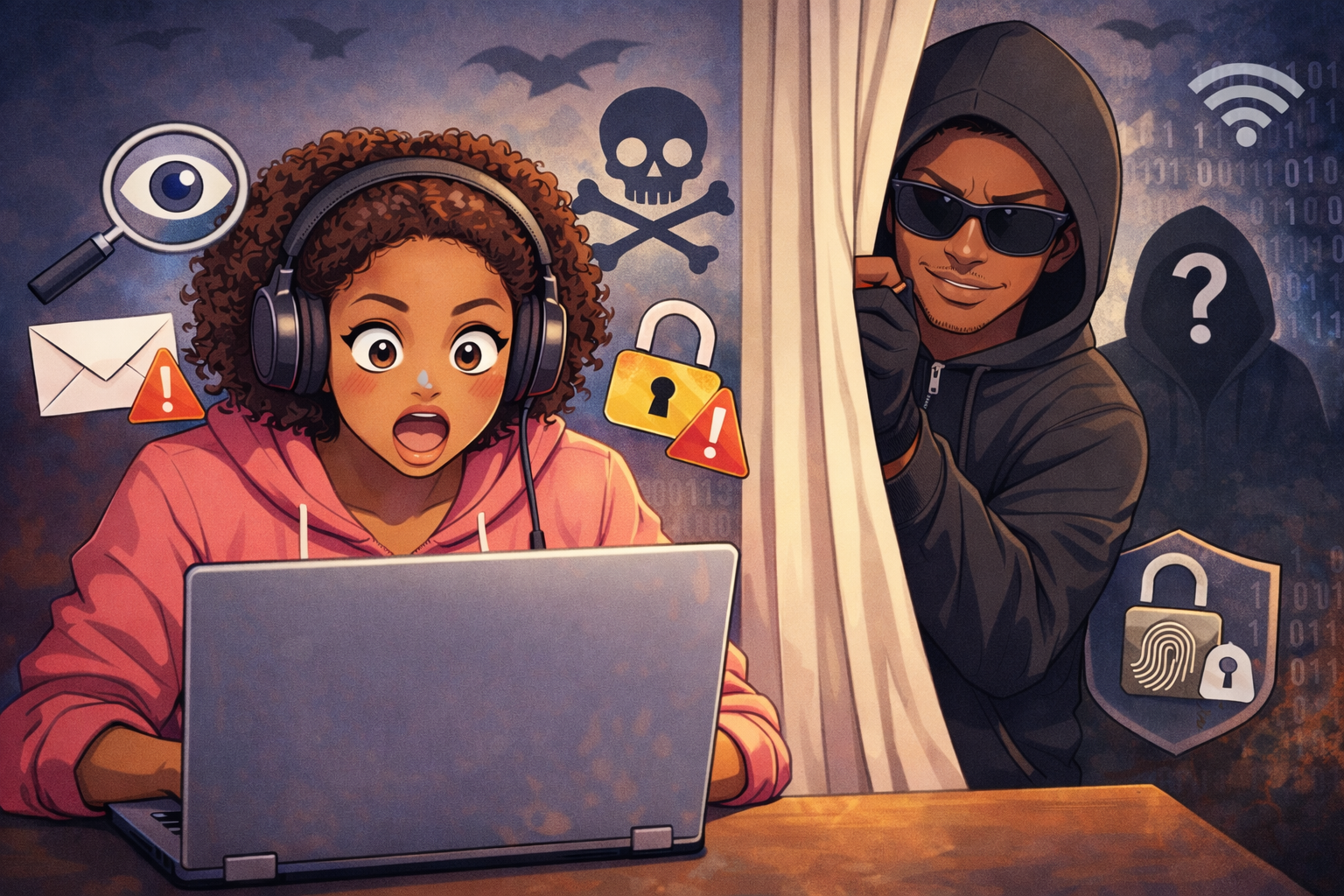
After reminiscing about this units’ reading, a TV show came to mind that instantly reminded me of the importance of privacy and agency on the internet. In an episode of Comedy Central’s animated series South Park, the boys failed to read Apple Product terms and conditions. As a product of that decision, they were kidnapped and forced to each be a link in a human centipede. This is a lewd example, and perhaps it’s a tad inappropriate, but without reading terms and conditions on the goods and services we use, we could all possibly be signing ourselves up for something equally horrifying. Similarly, carelessly sharing personal details in digital spaces can have negative consequences. It can be detrimental to one’s mental health, career, identity, and most of all, one’s peace of mind and agency while using digital devices.
In Lindsey C. Kim’s academic article Understanding and Maintaining Your Privacy When Writing with Digital Technologies, she states that
“When we do stuff online, we invite a lot of people and entities to access our devices, and this connection and exchange of information is the driving force of networked activity, thus our understanding of privacy in digital spaces must shift to account for this increased degree of access and interaction.”
In other words, when we use our smartphones, go on the internet, use online banking apps, browse inventory for a store – rather than leave the house to buy rock salt for an impending snowmageddon – or go online shopping; whenever we do a digital dive to search for resources for a class research paper and when we use Canvas to access course materials or submit our assignments, we are subjugating ourselves to privacy breaches with our information.
Your Life Online
Imagine everything that you do on your digital devices and all the personal items stored there. Devices like your phones, tablets, Alexa’s, Bluetooth or gaming systems; smart locks on your homes door (the only barrier between the outside world and the peace and serenity of your home), dissertations or book drafts; health portals containing all of your personal medical records; life insurance policies and access to your Transunion and Equifax information – in all of its healthy credit score glory.
Hackers or malicious people document and use all of this information, and if placed in the wrong hands, it can lead to your downfall. Third parties use metadata (statistics about your website visit) to dictate what pops up on your screen while you’re online. Every day, what we see on our digital devices is curated by those statistics from when we, and the people around us, type, post, travel, search, stream, and swipe.
Digital Cookie Crumbs
Whenever we go onto the net and enter our social security numbers, passwords, addresses, employment information, capture memories behind a lens on smart devices or through a SD card, we are leaving behind trails of cookie crumbs for companies (or even worse, possibly those on the dark web) to use and abuse said information. To take it a step further, some of us who are password challenged use options like “save my password” or use facial recognition or “limit times I enter my password” just because we lack the capacity to spend an extra fifteen to thirty seconds of our life to type in our usernames and passwords. So naturally, each and every one of us is at risk with the technology, devices, and networks we use. These shortcuts and lack of defense while using digital devices leave us vulnerable to virtual attacks, loss of personal data, money or identity.
How To Protect Your Privacy Without Sacrificing Agency In Digital Spaces
Taking time to do your own research can make or break your experiences in the digital world. Kim suggests doing simple tasks such as using browsers and browser extensions like Ghostery or Mozilla. These extensions operate with its users’ privacy in mind. Their mission is to create a healthy, protected digital experience. Their limiting third parties’ access to your personal information isn’t optional and making efforts to only use metadata when necessary is fundamental to their emphasis on honest operation.
Limiting how much data corporations have on you and use to intrude upon your devices meticulously detailed from your digital engagement. You never know who is watching, friend or foe. Next, defend your devices by opting out of cookies. Agreeing for sites to use cookies, until recently, I thought it was mandatory. It turns out that it isn’t true. Opting out of and clearing cookies is a great first step of defense. When it comes to privacy, tracking and strengthening your devices’ performance (lessening your device storage).
Additionally, ToSDR.org, or “Terms of Service; Didn’t Read” is a useful source where the terms and services text is simplified in layman’s terms for users to gain a better understanding of what companies will do with the data they collect from you while using their devices or services. Another element to keep in mind is your current and future employers, as well as your family, friends and people you are connected to have access to who you allow to see digital crumbs of your life. Be sure what you are posting reflects well on you. Yes, being an influencer is popular these days and yes, your life may be an open book, but you never know who or what is watching.
Conclusion
Be cognitive about what you post online and the degree of personal details you share with the world. Remember, the internet lives forever. If conversations, photos, sites, apps, subscriptions and cookies are deleted, there is a good chance that it has already been viewed, saved, shared, and used to personalize your browsing experience through what the algorithm pushes your way.


Leave a Reply