
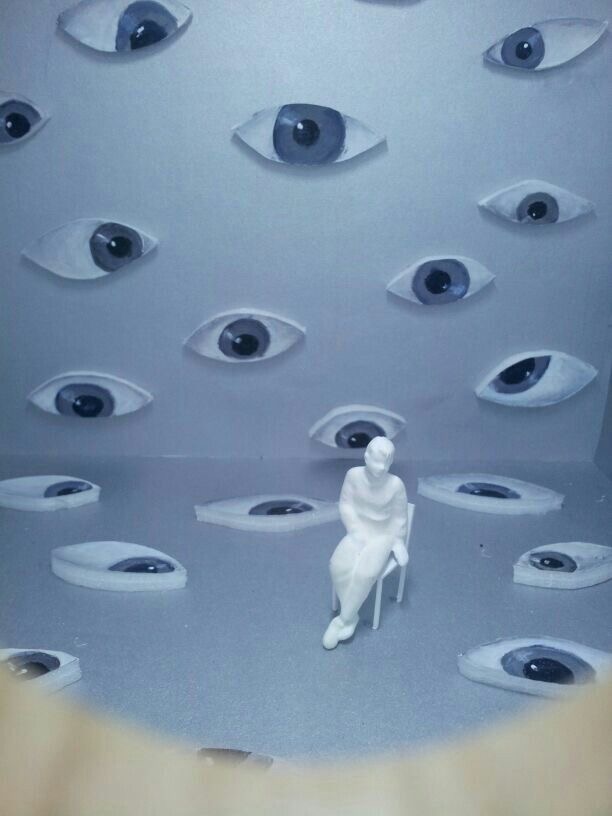
Visual rhetoric containing semiotics was a pleasant surprise. I learned about Roland Barthes from the cultural rhetoric class I took in China. Imagine my surprise when I saw semiotics and visual rhetoric in the same chapter. I only learned about semiotics and Barthes through his theory on myths. He studied how myths persuade an audience by a chain of semiotics. Myths are a type of speech (stories) communicated through internal discourse with historical and cultural meaning. For example, an American “myth” would be, “if you come to America, you’ll live a better life.” It persuades people to come to America even though it might be dangerous (like for immigrants). I think the same could be said about Visual Rhetoric.
Semiotics
Semiotics, simply put, is the study of meaning. They help us break down messages, examine patterns, and emphasize the importance/differences in communication between cultures. We use symbolism in everything in order to make sense of the world. To better understand semiotics, Ferdinand De Saussure came up with two terms. The signifier and the signified. The signifier includes: mainly (words), images, or sounds. The signified is the meaning our mind gives them.
Visual Rhetoric
They’re not all stories like myths, though (although it can be). Visuals are made with the intent to convince its audience of something. That meaning is cultural. “Images are not merely analogues to visual perception but symbolic artifacts constructed from the conventions of a particular culture.” Those symbolic artifacts are semiotics (the signifier) that we give meaning to. That meaning is heavily influenced by digital rhetoric.
Integration
If digital rhetoric, or rhetoric in general, is successful, the audience will likely sway to the intended perception. With multimodal and image cohesion, the use of images to construct persuasive power is at its peak.
To read my previous blogs, click here!


Leave a Reply