
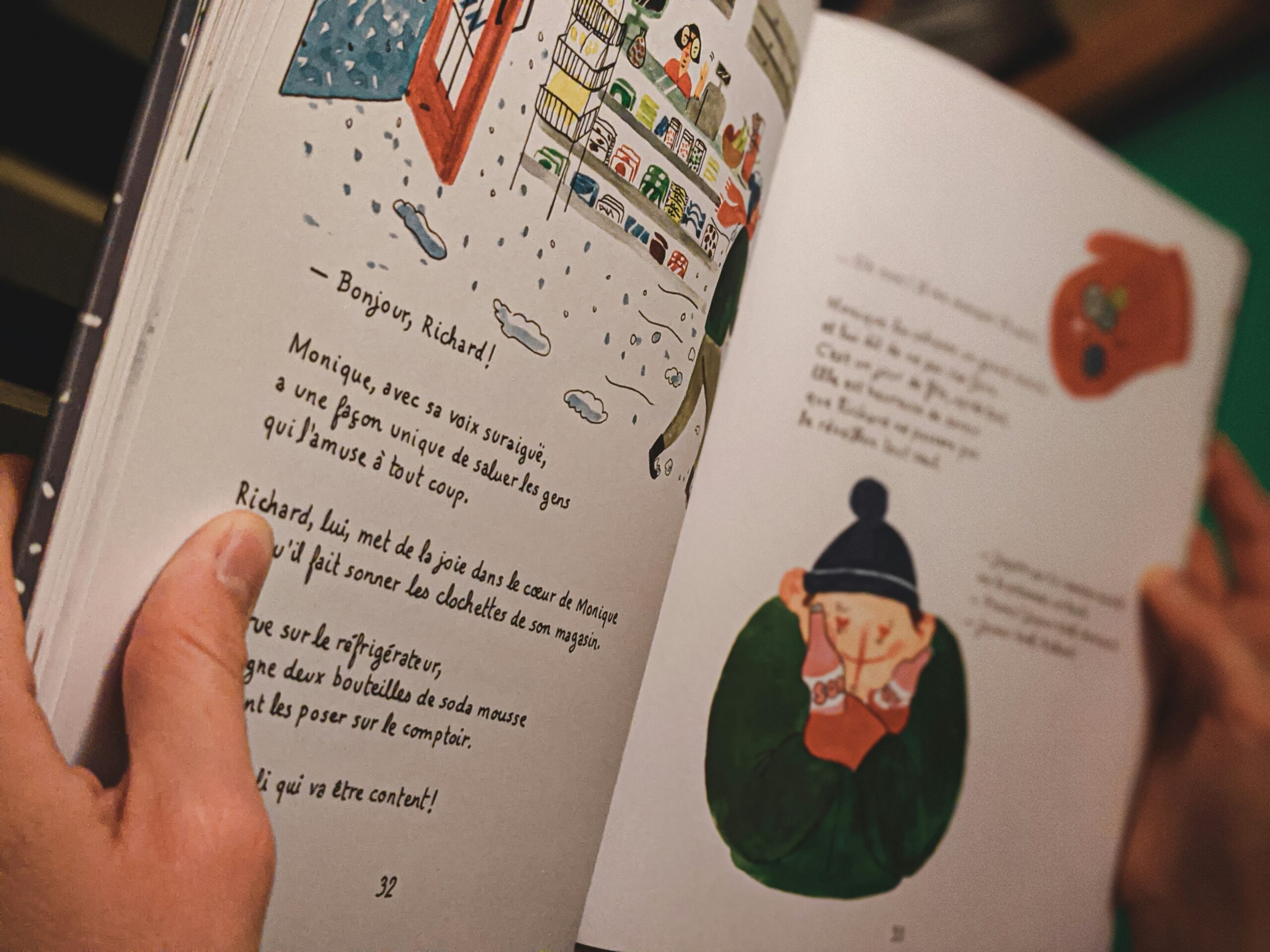
Growing up, picture books were the only books children were really reading. They contained little text and a plethora of illustrations. Although the pictures in these books are enjoyable to look at, they are more than just an artistic addition. Pictures, illustrations, and any visuals, while aesthetically pleasing, also help further the child’s understanding of the story being read, or told. With the lack of detailed prose, visuals take the place of the missing context. The illustrations in books carry the story along, while visually depicting the situation being written out. This gives the children a better image to create in their minds as they continue reading.
Children’s books are prime examples of multimodal storytelling and visual rhetoric, by using pictures and text together to convey meaning and information. One piece that comes to mind is Everyone Poops by Tarō Gomi. The pictures incorporated in his work are simple and creatively move the story along, while educating children about bodily functions. In early childhood education, many students are labeled as visual learners. By having illustrations in his book, he is providing a visual that communicates with the reader, or viewer. Jenae Cohn, author of “Understanding Visual Rhetoric” writes that visuals are part of understanding communication and contribute to meaning and information. By using pictures and illustrations in children’s books, the information of the text is more easily understood by the kids. A number of kids learn by way of example, or in other words visually, proving the importance of visual rhetoric.


Leave a Reply