
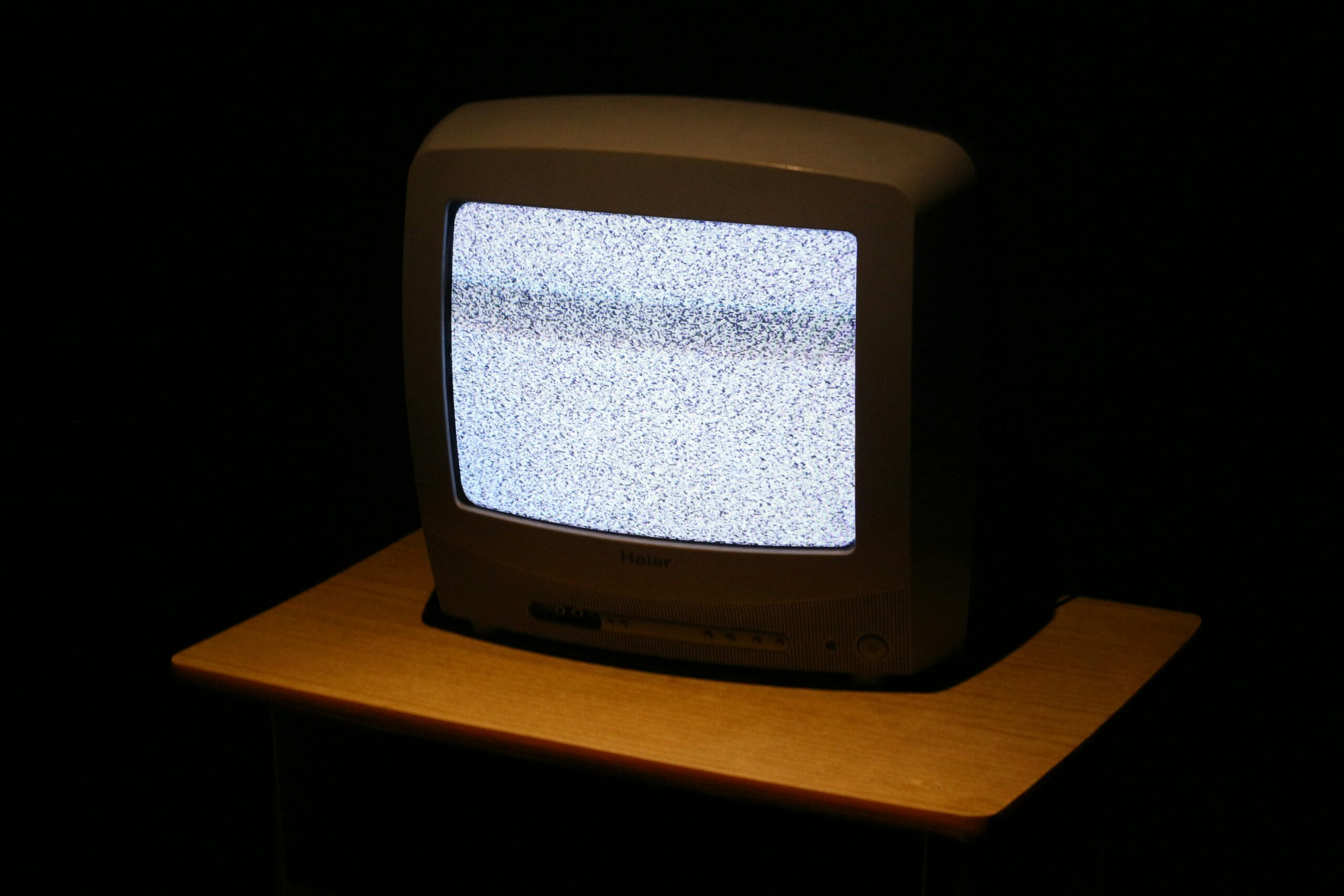
The word “analog” has become associated in my mind with the horror fiction sub-genre of “analog horror”. I’m not exactly sure why that’s the first thing that pops into my head. I’m a huge wimp when it comes to anything scary. Additionally, the Internet spaces I hang around are far away from horrific content. But after Douglas Eyman highlighted the intersectionality of analog vs digital, I first thought of this sub-genre.
What is “analog horror”?
If you aren’t familiar with the sub-genre, analog horror is most often categorized by its “found footage” type of video. Things like Blair Witch Project or Paranormal Activity. The use of old media like cathode-ray tube television, VHS, tapes, radios, and other such technology we would consider “analog”.
The graphics are low quality and there are almost little to no jumpscares. The horror of the sub-genre relies on the slow creeping tension of the familiar twisting into something sinister. You might feel something watching you back through the screen. Yet you’ll never find out what that foreboding sense of dread is. It sets itself apart from traditional horror by having the viewer be a character in the spectacle of the unknown.
All this which is to say, this type of horror isn’t exactly analog when we apply Eyman’s lecture, and that the genre is actually a great starting point in understanding digital rhetoric.
How does it relate to digital rhetoric?
Analog horror relies on the recordings of analog signals, which, from my understanding, are continuous sound waves. Eyman explains that digital systems are made of discrete values. We can also consider this sub-genre as “digital” horror because of the way technology has developed and is consumed.
The content may be based in continuous recordings, but we view it through a binary system. If I wanted to get all “um, actually” about it all, I’d say that the sub-genre encompasses both analog and digital elements at the same time.
As for the point on digital rhetoric, analog horror manages to seduce its viewers. It could twist the perfectly mundane into something frightening. Even I’m fascinated by the subject, but by no means will I go out and watch the content myself (again, wimp!). In a way, the sub-genre’s goal is not only to terrify us, of course, but to communicate feelings of helplessness through its use of faux-corrupted videos and software; fans find other fans and form a community to talk because analog horror always manages to linger in the mind better than any jumpscare-filled horror film.


Leave a Reply