
Understanding Intertextuality: Where Do We Encounter It IRL?
Have you ever had a feeling of deja vu when watching a new movie or listening to a new song? Like something you’ve never exactly seen or heard before, but it feels familiar due to references? Whether you were able to connect the dots or not, that likely wasn’t accidental; it was intertextuality at play.
What Is Intertextuality?
Intertextuality is a big, complicated word with a lot of substance, so let’s try to break it down. When a text uses references from or builds on another text, that is intertextuality. It doesn’t always have to be blatant references like direct quotes or just straight-up copying bits of the text. Oftentimes, it can be as subtle as just borrowing certain stylistic or thematic choices. Intertextuality is a tool writers can use to connect a new experience to something we already know.
Intertextuality in Everyday Life
Without us even realizing it, intertextuality pops up everywhre. Think song remixes, TikTok trends, memes, or even movies that parody other movies; that’s all intertextuality, too. Oftentimes, our ability to appreciate certain types of media relies on our understanding of its references, or “being in the know”.
For example, a song that parodies another song wouldn’t make much sense if you didn’t already know the original. Understanding the context of the original song allows us to give new meaning to the parody.
🎵 Music Example: Weird Al Yankovic – “Amish Paradise”
I’m sure most of you reading this are familiar with the ’90s Hip-Hop classic “Gangsta’s Paradise” by Coolio. The song deals with the very serious struggles of living in a harsh urban environment. It uses somber visuals and gritty lyrics to portray the harsh reality that Coolio really lived through. This is in VERY stark contrast to Weird al Yankovic’s parody, “Amish Paradise”, despite the similar melody and visuals.
I urge everyone reading this to take a moment to watch both music videos if they haven’t already.
Although Weird Al’s parody is entertaining enough in its own right, it really does become peak comedy when you are already familiar with the original (original being used lightly since Gangsta’s Paradise samples a Stevie Wonder song, which is yet ANOTHER example of intertextuality.
The humor only really lands if you know the context, so please watch them if you haven’t already. A few lines from each song just to demonstrate the absurdity:
Gangsta’s Paradise:
‘Cause I’ve been blastin’ and laughin’ so long that
Even my mama thinks that my mind is gone
But I ain’t never crossed a man that didn’t deserve it
Me be treated like a punk, you know that’s unheard of
You better watch how ya talkin’ and where you walkin’
Or you and your homies might be lined in chalk
I really hate to trip, but I gotta loc
As they croak, I see myself in the pistol smoke, fool
I’m the kinda G the little homies wanna be like
On my knees in the night sayin’ prayers in the streetlight
Amish Paradise:
A local boy kicked me in the butt last week
I just smiled at him and I turned the other cheek
I really don’t care, in fact I wish him well
‘Cause I’ll be laughing my head off when he’s burning in Hell
But I ain’t never punched a tourist even if he deserved it
An Amish with a ‘tude? You know that’s unheard of
I never wear buttons but I got a cool hat
And my homies agree, I really look good in black, fool
I’m the pious guy the little Amlettes wanna be like
On my knees day and night scoring points for the afterlife
🎬 Movie Example: Scary Movie 1
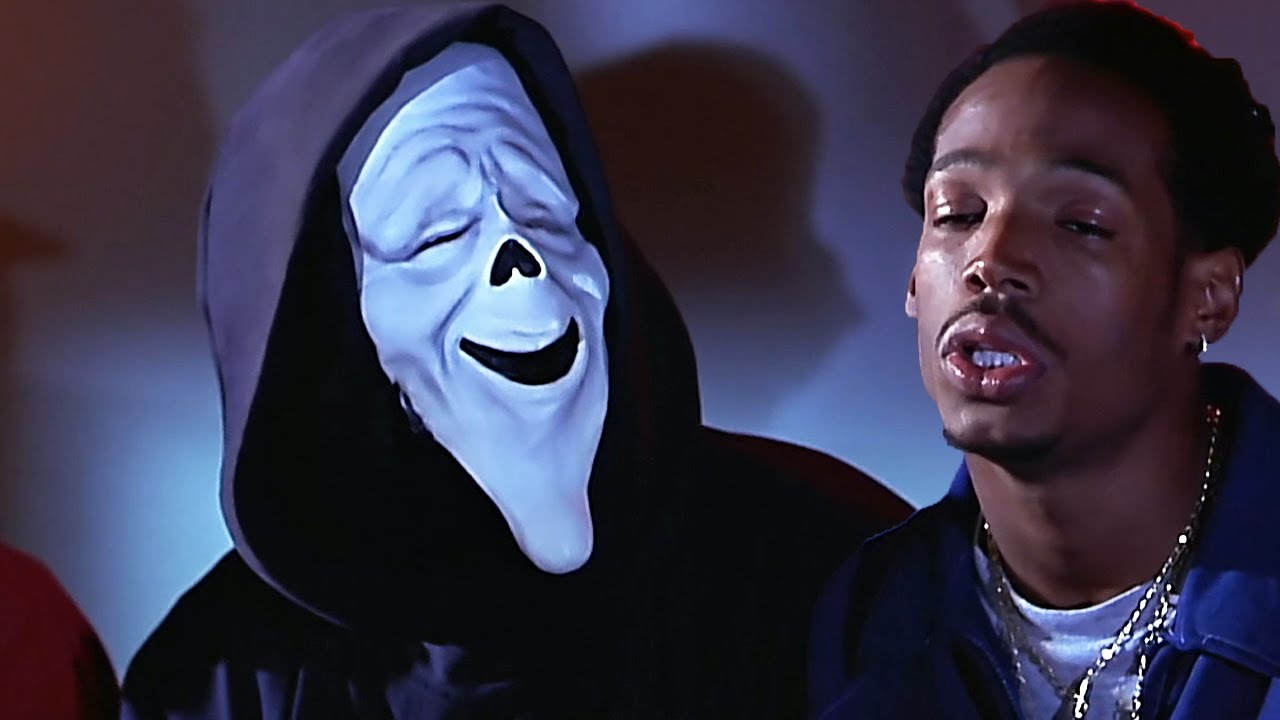
The Scary Movie series is one of my favorite movie series of all time. As a fan of horror, the writer’s ability to poke fun at some of the absurdity found in horror films while still staying relatively in line with the source material never fails to amaze me. The reference I will use here is clips from Scream 1 and Scary Movie 1, an almost complete parody.
I think the clips pretty much speak for themselves. Despite that, I find it very impressive how two scenes with fairly similar plots can bring out such drastically different reactions in the viewer, fear and laughter, respectively. Once again, references in the movie are yet another example of intertextuality. Although you can enjoy Scary Movie without watching Scream first, the true appreciation comes from understanding the references being made.
Why It Matters
The existence of intertextuality gives proof to the idea that texts don’t exist in isolation. Media culture as a whole is a big mish-mash, constantly repeating and reshaping each other, evolving over time. Whether it be through remix, parody, references, or even direct quotes, intertextuality provides us with a deeper understanding and enjoyment of the content we consume by linking it to memories we have already made with past content.


Leave a Reply