
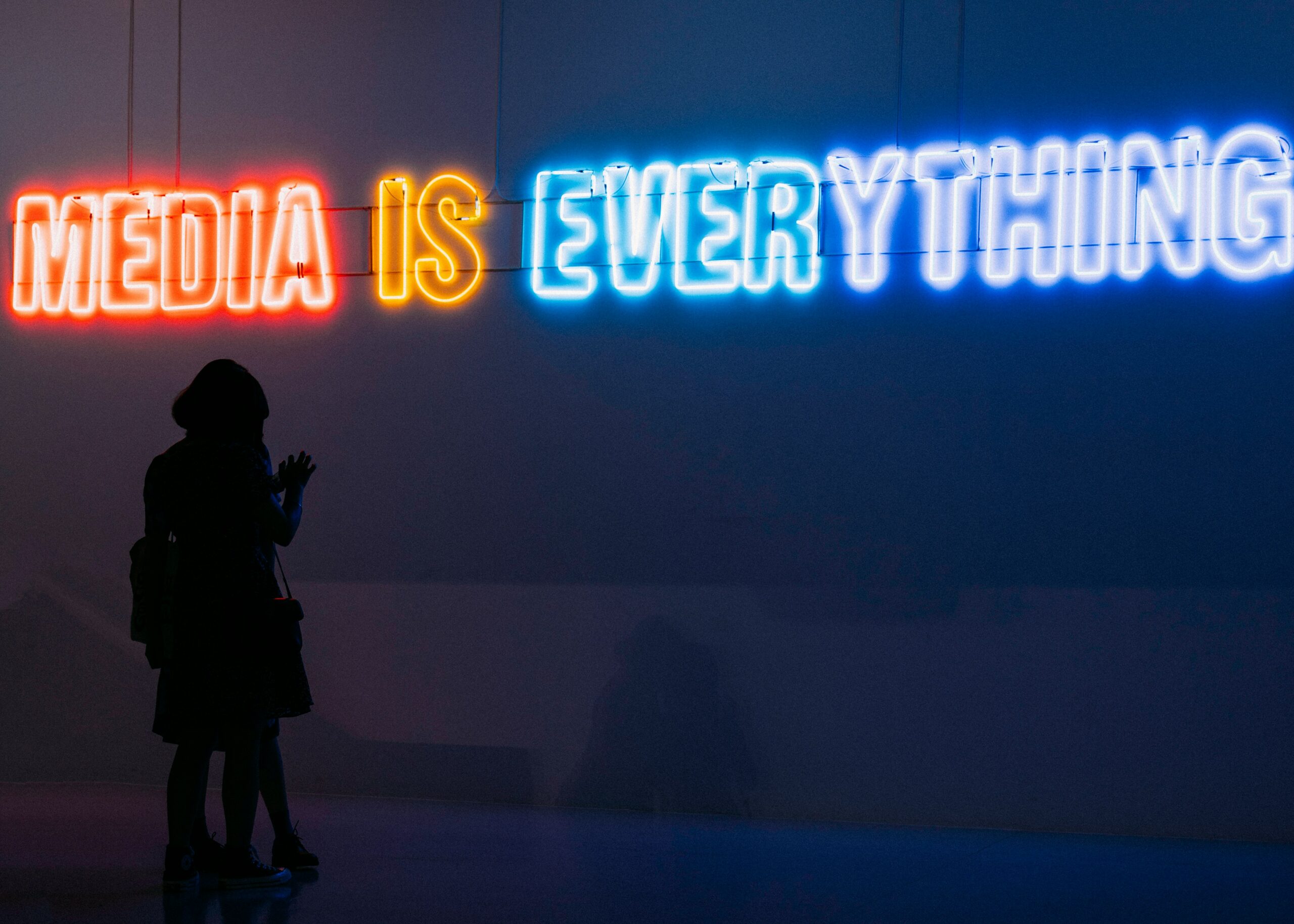
Marshall McLuhan famously stated that “the medium is the message.” However, he wasn’t talking about cable news or specific videos on TikTok. Instead, he pointed toward a deeper truth: the technologies we create redefine the “scale, pace, and pattern” of human life. This shift represents one of the most profound digital connectivity effects we experience today.
In J.D. Applen’s Writing for the Web, we learn that tools reshape our brains. To understand our digital world, we must look past the content. Consider McLuhan’s light bulb example. While a light bulb has no “content,” its message created our 24-hour society.
Analyzing Modern Digital Connectivity Effects
Today, smartphones and search engines act as our “light bulbs.” The message of the smartphone involves more than the text message you just received. Rather, it signals a cultural shift toward constant availability.
Consequently, we have traded the quiet of a walk to lunch for a perpetual state of connectedness. This often happens at the cost of our own internal reflection. According to Nicholas Carr, the Internet is a “godsend” for efficiency. Nevertheless, it functions as a double-edged sword for our cognitive depth. As Martin Stellinga notes in his analysis of The Medium is the Message, the true impact of a medium creates a “new scale” for society.
How the Internet Changes Reading
One concerning “message” of internet mediums involves the decline of deep reading. Applen highlights the work of Maryanne Wolf and Nicholas Carr to show that we are becoming “decoders” rather than “deep readers.” We scan, we flick, and we power-browse.
Furthermore, this “horizontal” reading style affects everyone, not just the “Google Generation.” Studies show that even seasoned professors now read only abstracts and snippets. They rarely engage with long-form arguments anymore.
Overcoming the Digital Connectivity Effects
Tools like Google and PowerPoint further complicate our relationship with knowledge. Google rewards quick fact-finding, yet this creates an “illusion of understanding.” If a computer like IBM’s Watson can win Jeopardy!, does that make it intelligent?
Not necessarily. True intelligence requires us to navigate ambiguity. A bulleted list or a quick search result often ignores these nuances. As we continue to refine our skills in digital brand strategy, we must ask a vital question. Are we providing “the answer,” or are we inviting our readers to think more deeply?
The Invisible Message
When Marshall McLuhan famously stated that “the medium is the message,” he wasn’t talking about cable news or specific videos on TikTok. He was pointing toward a deeper truth: the technologies we create redefine the “scale, pace, and pattern” of human life. This shift is one of the most profound digital connectivity effects we experience today.
In J.D. Applen’s Writing for the Web, we are reminded that to understand our digital world, we must look past the content and examine how the tools themselves are reshaping our brains. Consider McLuhan’s often-used light bulb example. A light bulb has no “content,” yet its message was the creation of a 24-hour society.
Modern Digital Connectivity Effects on Daily Life
Today, our “light bulbs” are smartphones and search engines. The message of the smartphone isn’t the text message you just received; it is the cultural shift toward constant availability. One of the primary digital connectivity effects is that we have traded the quiet of a walk to lunch for a perpetual state of connectedness, often at the cost of our own internal reflection. As noted in Martin Stellinga’s analysis of The Medium is the Message, the true impact of a medium is found in the “new scale” it introduces to our society.
The Death of Deep Reading
One of the most concerning “messages” of internet mediums is the decline of deep reading. As Applen highlights through the work of Maryanne Wolf and Nicholas Carr, we are moving away from being “deep readers” and becoming “decoders.” We scan, we flick, and we power-browse.
Navigating Ambiguity in a Coded World
If a computer like IBM’s Watson can win Jeopardy!, does that mean it is intelligent? Not necessarily. True intelligence involves navigating ambiguity—something a bulleted list or a quick search result often ignores. As we continue to explore our class categories and previous discussions, we must ask ourselves: are we providing “the answer,” or are we inviting our readers to think more deeply?
When Marshall McLuhan famously stated that “the medium is the message,” he wasn’t talking about the cable news specific videos on TikTok. He was pointing toward a deeper truth. The technologies we create redefine the “scale, pace, and pattern” of human life.
In J.D. Applen’s Writing for the Web, we are reminded that to understand our digital world, we must look past the content and examine how the tools themselves are reshaping our brains. Consider McLuhan’s often used the light bulb example . A light bulb has no “content,” yet its message was the creation of a 24-hour society. Today, our “light bulbs” are smartphones and search engines. The message of the smartphone isn’t the text message you just received; it is the cultural shift toward constant availability. We have traded the quiet of a walk to lunch for a perpetual state of connectedness, often at the cost of our own internal reflection.
The Death of Deep Reading
One of the most concerning “messages” of the internet mediums is the decline of deep reading. As Applen highlights through the work of Maryanne Wolf and Nicholas Carr, we are moving away from being “deep readers” and becoming “decoders.” We scan, we flick, and we power-browse. This “horizontal” reading style isn’t just a habit of the younger “Google Generation”; studies show that even seasoned professors are now prone to reading only abstracts and snippets rather than engaging with long form arguments.
Tools like Google and PowerPoint further complicate our relationship with knowledge. Google rewards quick fact-finding, which can create an “illusion of understanding.” If a computer like IBM’s Watson can win Jeopardy!, does that mean it is intelligent? True intelligence involves navigating ambiguity. As we continue to write for the web, we must ask ourselves: are we providing “the answer,” or are we inviting our readers to think more deeply?


Leave a Reply