
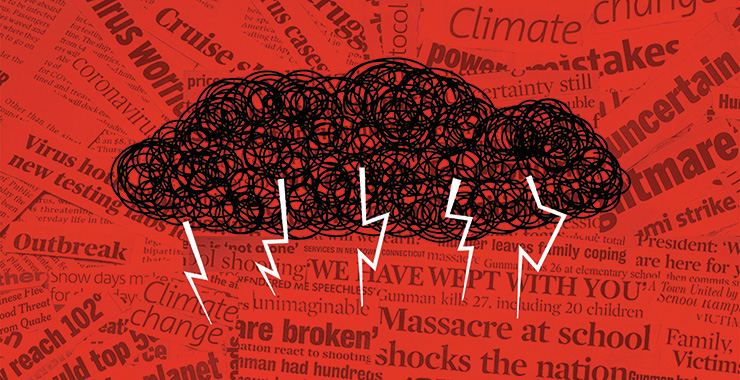
Have you ever noticed how many browser tabs you have open right now (there are at least 12 open on my Chrome)? Or how many notifications seem to be competing for your attention? Our digital environment goes beyond delivering content, instead bombarding us with constant reminders that we’re engaging with media. Welcome to “hypermediacy”.
Hypermediacy is described J. David Bolter as media that constantly reminds us we’re looking at a construction. It wants to be seen, and is unironically the opposite of “transparency”. Unlike traditional books that hide their medium, digital interfaces love to call attention to themselves.
Look at any news website today. It doesn’t simply show an article. It surrounds you with:
- Breaking news alerts
- Autoplay videos
- Live comment counts
- Social sharing buttons
- “Recommended for you” sidebars
- Subscription prompts
In the logic of hypermediacy, designers want you to notice the medium itself. Bolter explains that they “strive to make the viewer acknowledge the medium as a medium.” The interface isn’t just delivering content anymore. It becomes part of the message.
Hypermediacy and Information Overload Psychology
This constant awareness of media comes with psychological costs. Research from the American Psychological Association shows hypermediacy can trigger what some call “headline stress disorder.”
Dr. Don Grant, who studies media psychology, sees this in his patients. “They’re perseverating on it—it’s bothering them,” he notes. Many experience anxiety and depression from constant media exposure.
The problem extends beyond content to presentation. Hypermediated websites feature crowded layouts with competing elements. This visual overload creates urgency and overwhelm. Traditional media rarely produced such effects.
Modular Structure vs. Narrative Flow
Lev Manovich provides another framework for understanding hypermediacy. He contrasts traditional media’s narrative structure with new media’s database approach. Books and films guide you through a deliberate sequence. The creator controls your journey. But hypermediated platforms work like databases. They present collections of discrete units accessed in any order.
Manovich notes that in databases, “What comes before or after each element is of no consequence.” This explains your Twitter experience. A global crisis appears next to someone’s breakfast photo. No hierarchy exists between them.
This hypermediated, modular approach changes how we think. As Sarah Abrego explores, Richard Lanham suggests online text becomes “unfixed and interactive.” We skim rather than deeply engage. We become digital flâneurs making “split-second virtual” connections.
Hypermediacy Makes Media Opaque, Not Transparent
Traditional media aims for transparency. It makes the medium invisible so you focus only on content. When absorbed in a novel, you forget you’re reading words on a page.
Hypermediated environments are deliberately opaque. They constantly remind you of their presence. Lanham observes that online, letters become “opaque” – we see them rather than through them.
This opacity creates more critical awareness. We can question and reshape hypermediated content rather than passively absorb it.
Yet it also fragments our attention. Psychologist Matthew Price found social media news exposure increased depression symptoms. The hypermediated presentation wasn’t just delivering information. It was amplifying emotional impact.
Navigating Media Without Being Overwhelmed
How do we handle hypermediacy without becoming information casualties? Experts suggest several approaches:
Steven Stosny, who studies media stress, recommends:
- Writing headlines in longhand to slow processing
- Turning off notifications
- Setting social media time limits
- Creating daily tech-free periods
The APA suggests getting involved in causes rather than just consuming content. Taking action creates agency where hypermediacy often creates passivity.
Mindfulness about hypermediacy itself helps most. Recognize how hypermediated environments capture and fragment your attention. This awareness enables more conscious engagement.
We won’t return to purely transparent media. We live in what Bolter calls the “late age of print” where digital forms dominate. But understanding hypermediacy helps us engage more intentionally.
Next time you’re surrounded by hypermediated content, ask yourself: Am I controlling this medium? Or is it controlling me?


Leave a Reply